Further Than Intuition: Utilizing one Car Dynamics Application for Better Suspension Setup & Alignment
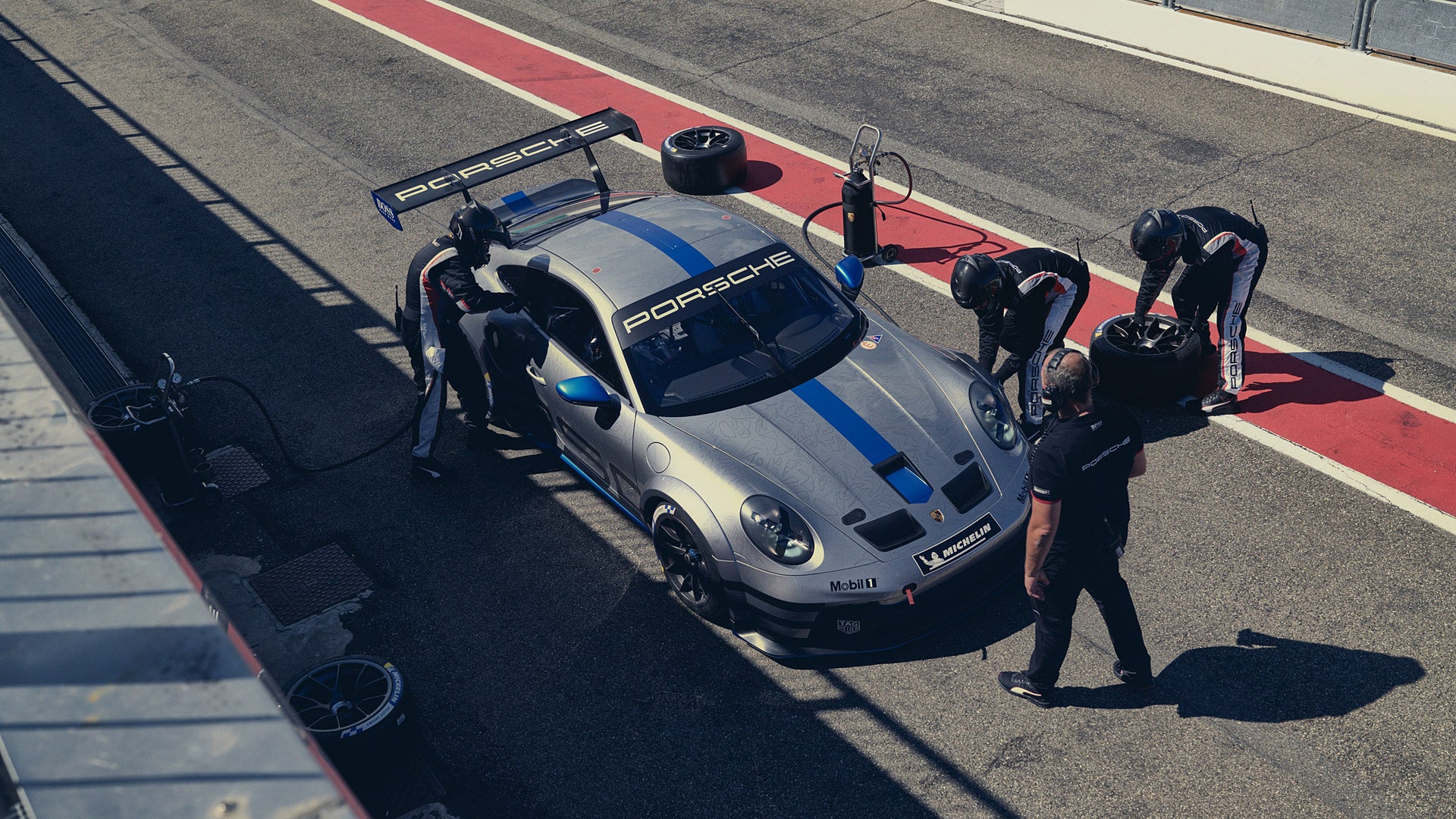
Within the high-stakes realm of today's serious drifting, victory is far more than purely a product of raw horsepower or driver bravado. Rather, it has evolved into a multifaceted science that requires a meticulous blend of picking a inherently capable chassis, arming it with the most precise performance components, and, most critically, comprehending its dynamic performance on the course through advanced suspension tuning applications. This comprehensive manual will serve as your blueprint starting from the very first concept of a competition vehicle right through to the last engineering-refined adjustments that elevate a strong vehicle into a consistent podium finisher. We will examine in detail the art and science of chassis dynamics adjustment, showing how a modern vehicle dynamics tool like precise measurement hardware eradicates guesswork and delivers unmatched insight into your vehicle's true behavior.
The cornerstone of any exceptional drift machine is, indisputably, the base vehicle itself. Certain cars have attained legendary standing within the international oversteer community due to their inherent handling characteristics, robust build quality, and the vast ecosystem of specialist components available. Choosing the correct car is the first and most crucial decision a driver will make. For instance, the BMW's E36 3 Series is commonly accepted as perhaps the the best all-around drift cars of history. Its excellent balanced front-to-rear weight, alongside a driven rear axle layout and extremely reliable six-cylinder powerplants, establishes a car that is both accessible for novices and extremely effective in the control of a professional pilot. The next step of this philosophy, the BMW E46 platform, refines these strengths with a more developed structure, broader stance for improved high-speed stability, and even increased turning capability as standard from the OEM. A different formidable platform in the professional arena is the Chevrolet Corvette C6.
This American performance car introduces a unique set of advantages to the drifting sport, such as a lightweight alloy frame, a rear-mounted transaxle that aids in an excellent weight distribution, and the immense low-end power of a large-displacement LS-series V8 engine. This fusion renders it an absolute monster on track, designed of starting and sustaining extended drifts with seemingly easy use of power. For drivers looking for remarkable performance per dollar, the Nissan 350Z rises above as a top-tier candidate. It arrives from the factory with a rigid platform, a decent factory LSD, and the responsive V6 motor that provides sufficient performance for learning and advancing in the activity. Its successor, the 370Z model, presents additional advancements in body strength, steering geometry, and outright motor output, solidifying its position as a popular choice among competitive drivers. Additional iconic platforms that deserve mention include the lightweight rotary-powered Mazda FC RX-7, the ubiquitous Nissan S13 240SX, the torque-rich Ford SN95, the electronic-equipped BMW E90, and the compact yet unbelievably engaging and instructive MX-5 Miata. Each of these platforms gives a unique array of traits, challenges, and potentials, but they all possess the fundamental components essential to serve as a competitive drift car.
However, picking the correct platform is only the first step. To release the full performance of every of these machines, significant upgrades to the steering system and damping and springing systems are completely non-negotiable. This is where the realm of performance tuning components comes into critical focus. The single most transformative modification for a purpose-built drift car is the fitting of a maximum-angle drift angle kit. These advanced kits, for example those developed by performance brands like SLR Speed, are created to dramatically expand the car's possible turning lock. A standard road car is extremely limited in how far its tires can rotate, a design trade-off for daily use. In oversteer driving, conversely, aggressive steering input is frequently needed to control and hold a slide. An steering kit exchanges the stock steering knuckles, rod ends, and potentially control arms with parts that allow the steered wheels to achieve degrees of turn over 70 or even 80 degrees, compared to a average OEM angle of around 40 to 50 degs.
This tremendously greater capability provides the driver with exponentially greater command during a angle, enabling it to be considerably easier to start a oversteer moment, sustain it through a extended turn, and change seamlessly from one side to the other. The difference in handling is nothing short of profound. Combined with a appropriately specified angle kit is the equally essential modification to the car's suspension. Generic or even premium road dampers are simply not intended for the unique and brutal demands of sliding. A purpose-built pair of adjustable dampers is paramount. These specialized suspension components have unique piston tuning and spring strength that are tuned for the violent mass transition that is inherent of aggressive driving. When a driver initiates a drift, the vehicle's mass is thrown violently to the front of the turn. Proper performance suspension control this movement in a consistent way, allowing the vehicle to find its balance promptly and providing the driver accurate feel through the controls and driver's seat. They additionally enable exact tuning of ride height, shock absorber rate, and cross-weight, which are all fundamental aspects of optimizing the vehicle's behavior to a specific circuit or driving technique. Together, a precision-engineered steering angle kit and a correctly specified set of performance suspension units constitute the core hardware base upon which all later tuning is constructed.
Once the core parts is fitted, the subsequent essential phase in the development is the precise setting of the vehicle's suspension geometry. This is the domain of vehicle alignment optimization, a methodology that can seem daunting to the newcomer but is, in practice, the secret to turning a collection of capable parts into a unified and predictable vehicle. The most debated aspect of suspension geometry for oversteer is definitely camber. Camber is the angle of the wheel in relation to the upright plane when looked at from the forward of the chassis. If the top of the tire is angled towards the chassis, this is called negative camber. For sliding, inward-leaning wheels on the steering tires is widely used and is regarded as necessary. The logic is intrinsically related to physics.
When a vehicle is cornering at limit sideways angles, the chassis leans toward the outside of the bend. This lean forces the outer steering tire to lose its optimal grip area with the asphalt. By adding negative camber, the wheel is pre-leaned to counteract this roll. As the chassis tilts into the turn, the tire flattens out with the track, maximizing its bite at the exact moment when it is needed most for directional command. Usually, front axle angles for a competition drift machine range from approximately -3 degrees to as high as -5 degrees or even greater, contingent on the details of the chassis geometry, tire type, and driver feel. The rear tires also use negative camber, but the angles are generally more modest and subtler than the front axle. Excessive inward lean at the back can make the car extremely loose and hard to control on acceleration application, as it shrinks the available contact patch of the driven tires during straight-line throttle application. Therefore, rear camber settings are frequently in the vicinity of -1 degree to -3 degrees, striking a precise equilibrium between offering adequate cornering grip to assist in entering and holding the slide while simultaneously preserving good hook-up for power-down the corner. alignment is merely one part of the broader alignment equation, which furthermore includes toe, caster angle, and suspension-induced steering correction.
Toe describes the direction of the tires when looked at from above. Toe-in means the front edges of the tires are nearer together than the trailing edges, while negative toe means the converse. For drifting, a small amount of front axle toe-out is often used to sharpen the initial steering response, making the car feel more agile and eager to initiate a slide. Rear toe is usually set to neutral or a very slight amount of toe-in to promote stability under acceleration. Caster is the frontwards or backwards inclination of the suspension pivot when viewed from the lateral of the chassis. More caster increases steering feel and high-velocity solidity, and it furthermore adds to inward lean gain during steering, which is highly useful. Tuning these values is a detailed interaction where a modification to one value can and often will influence the others. The old-school method for tuning a chassis's alignment for drifting has for a long time been a tedious endeavor of trial and error. A tuner or team would make a change based on experience, drive the vehicle on track, depend on the driver's personal feel and comments, and then make another change. This process would continue over and over until the vehicle felt "right" or the available testing session was exhausted. This methodology is not only incredibly wasteful in terms of hours and resources, but it is furthermore inherently inaccurate.
Driver sensation is a famously unreliable data source, influenced by countless elements such as tiredness, changing track surfaces, temperature, and simply the focus of the driver on that specific run. What feels "oversteery" on one lap might feel "tight" on the subsequent lap, causing confusing information and counterproductive tweaks. This age-old limitation in vehicle dynamics optimization is precisely where modern engineering tools has stepped in to transform the methodology.
The rise and application of advanced suspension tuning applications has ushered in a completely new age for tuning and refining competitive drift machines. This new generation of systems, exemplified by cutting-edge systems like GripDial, function by physically measuring the live mechanical behavior of the vehicle as it is piloted on the course. In contrast to depending on personal feedback, these devices acquire measurable metrics on essential factors such as suspension travel, individual tire rotation, lateral and longitudinal g-forces, lock position, and accelerator and brake pedal position. This collected data stream is then processed by powerful applications that can plot and decode the data in a clear format. For the first time ever, engineers and crews can observe exactly what the chassis is exhibiting at any given millisecond of a drift. This capability revolutionizes the complete alignment optimization procedure. Consider the specific goal of optimizing the front camber for a particular vehicle. Rather than making a modification from -3 degrees to -3.5 degrees and then testing several passes to try and "perceive" a improvement, a telemetry system can deliver immediate and definitive data. The tool can show graphically how the tire's loading is performing during the critical stages of a angle: turn-in, mid-corner, and changing direction. It can demonstrate if the present angle is allowing the loaded tire to keep ideal grip or if the tire is over-stressed on its outside shoulder.
The software can then suggest empirical suggestions for adjustment. Perhaps the information reveals that the tire is even stressing its sidewall at -3.5 degrees of negative camber, suggesting that an increase to negative camber, say -4 degrees, might be warranted. Conversely, the data might show that the tread is not coming up to temperature or that the inner shoulder is degrading unevenly, which could point to that there is too much negative camber and a slight decrease back to -3.2 degrees would be better ideal. This standard of precision and actionable intelligence was literally unimaginable in the days of exclusively mechanical adjustment.
The effect of using a comprehensive vehicle dynamics tool extends much further than just optimizing alignment. It becomes an invaluable suspension tuning guide that is tailored to your exact car. When adjusting the shock absorber clickers on your suspension, instead of relying on general tips or replicating another driver's setup, you can employ the software to observe how the car is reacting in relation to your adjustments. The application can graph the wheel movement path over a run, revealing if the dampers are handling the chassis motion properly or if they are allowing the car to become unsettled too much after a direction change. It can help in pinpointing problems like hitting the bump stops or topping out, enabling you to introduce educated decisions to spring preload, damping rates, or stance. This methodology applies equally to the detailed drift angle kits art of corner balancing. Beyond camber, the software can offer insight into how changes to toe settings and caster angle are impacting the vehicle's stability during different parts of a lap. For example, it can help you to find the optimal amount of front negative toe for your particular steering setup and competition technique by analyzing the speed of initial response and the predictability of the car at lock steering angle. This transforms the software an exceptionally useful drift suspension tuning guide that is constantly calibrated by the live behavior of your personal vehicle on the circuit. It elevates the whole endeavor from a mysterious craft into a repeatable development exercise.
Moreover, the value of a tool like GripDial is not at all limited to experienced engineers with vast resources. For the amateur driver, it serves as an powerful force multiplier. It practically offers the driver with the knowledge of a professional suspension specialist without requiring the associated cost. It speeds up the development time by providing unambiguous solutions to challenges that would otherwise take countless track days drift angle kits of experimentation to understand. suspension tuning tool A driver can understand how their individual car behaves to various adjustments, developing a more profound knowledge of vehicle dynamics in the process. It additionally opens up professional suspension engineering techniques, allowing anyone with the desire to optimize their machine to do so in a structured and productive way. This is notably significant in a discipline like oversteer competition, where setup know-how has traditionally been a tightly held advantage among professional crews. Now, that capability can be in the garage of every motivated enthusiast.
In conclusion, the journey to constructing and dialing in the perfect high-performance drift car is a multi-faceted project that smoothly integrates classic engineering wisdom with 21st-century telemetry solutions. It commences with the informed choice of a capable chassis, then enhanced by the integration of critical competition parts like high-performance steering angle kits and properly selected competition suspension units. The build then moves into the intricate realm of car suspension tuning, where values like camber angle, toe setting, and caster are precisely adjusted to complement the vehicle's modified hardware and the driver's individual needs. Finally, and what genuinely differentiates the today's methodology from the traditional methods, is the integration of a advanced drift telemetry software. This system eradicates the uncertainty and inefficiency of purely seat-of-the-pants tuning by delivering objective, actual telemetry on how the chassis is actually behaving. It serves as an unparalleled suspension tuning tool, a comprehensive coilover setup manual, and a comprehensive chassis development system. Together, this complete philosophy guarantees that every aspect of the drift car—from the choice of the car to the final tweak on the suspension—is refined for peak competitiveness on the competition venue. It embodies the total progression of the sport of oversteer driving, merging raw pilot talent with precise vehicle setup to build the most dominant cars imaginable.